
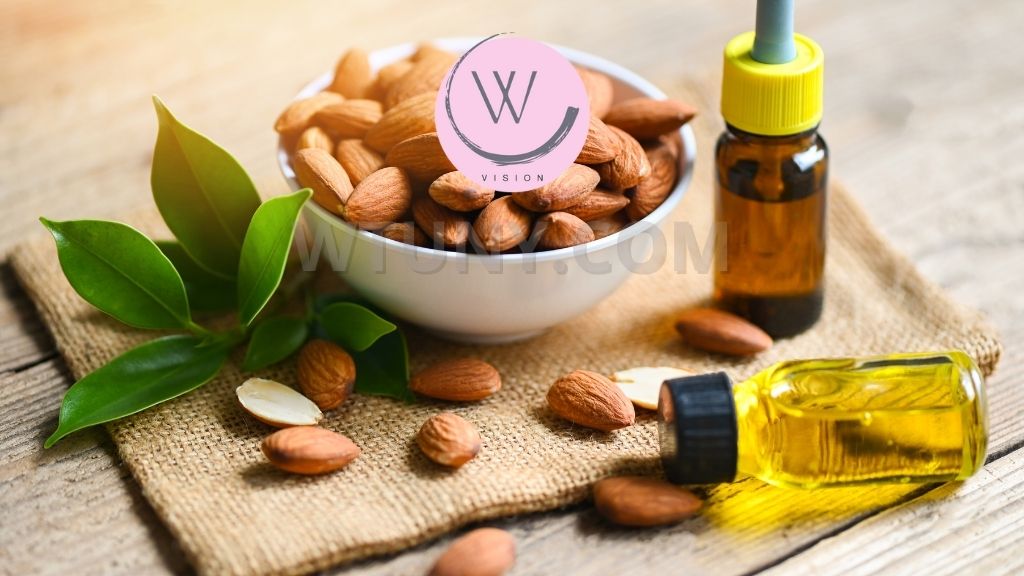
Almond oil is a versatile plant oil made from almond kernels. It is commonly used in cooking, skincare, massage, and hair-care products. Its nutritional profile includes mostly unsaturated fats, along with compounds such as tocopherols (forms of vitamin E), phytosterols, oleic acid, and linoleic acid.
However, “almond oil” can refer to different products. Sweet almond oil is the type generally used as a food ingredient and carrier oil for the skin. Bitter almond products are different and may require special processing before they are safe to use. Always check the product label and intended use.
Nutritional profile of almond oil
Almond oil is primarily a source of fat rather than protein, fibre, vitamins, or minerals. Much of its fat consists of monounsaturated and polyunsaturated fatty acids. It also contains naturally occurring antioxidant compounds, including tocopherols, as well as phytosterols and squalene.
These components make almond oil a useful alternative to other culinary oils, but it remains calorie-dense. Portion size matters, particularly when it is added to meals that already contain several sources of fat.
Potential health benefits
May support a heart-conscious eating pattern
Replacing some sources of saturated fat with oils that are higher in unsaturated fat may fit within a heart-conscious diet. Almond oil contains substantial amounts of unsaturated fatty acids, including oleic acid. Some research discussed in the legacy material associated almond oil consumption with changes in cholesterol and triglyceride levels, but these findings do not establish almond oil as a treatment for high cholesterol or heart disease.
People with cardiovascular disease or abnormal cholesterol levels should follow advice from a qualified healthcare professional rather than relying on almond oil alone.
May be useful for dry skin
Sweet almond oil is an emollient, meaning it helps soften and condition the skin. It is often used in moisturisers, massage oils, and products intended for dry or rough skin. Its fatty acids and vitamin E compounds may help support the skin’s surface when applied as part of a basic moisturising routine.
It may feel helpful for dryness associated with conditions such as eczema or psoriasis, but it does not replace prescribed treatment. Apply a small amount to a limited area first, especially if you have sensitive skin.
May be relaxing in massage or aromatherapy
As a smooth carrier oil, sweet almond oil is commonly used for massage. Massage itself may promote relaxation and temporarily ease feelings of tension. This should not be confused with proof that almond oil treats anxiety, depression, fatigue, sleep disorders, or other medical conditions.
Possible effects on blood sugar and cancer
Early research has explored whether almond oil and other almond-derived foods may influence blood sugar, cancer-related processes, or the growth of cells in laboratory settings. These findings are not enough to show that almond oil prevents or treats diabetes or cancer in people.
Do not use almond oil instead of diabetes medication, cancer treatment, or medical follow-up. Anyone managing one of these conditions should discuss dietary changes with their healthcare team.
How to use almond oil
- Use food-grade sweet almond oil in salad dressings or other recipes where its flavour is suitable.
- Use it as a finishing oil rather than assuming that every almond oil product is intended for high-heat cooking.
- Apply a small amount of cosmetic-grade sweet almond oil to dry skin or use it as a massage carrier oil.
- Check labels carefully: products intended for cosmetic use should not be eaten.
- Store the oil according to the package directions and avoid using it if its smell or appearance has noticeably changed.
Possible side effects and precautions
Almond oil may cause an allergic reaction in people with an almond or tree-nut allergy. Reactions can include itching, rash, swelling, breathing difficulty, or digestive symptoms. Anyone with a known allergy should avoid almond oil unless a qualified clinician has advised otherwise.
Topical use may cause irritation or contact dermatitis. Test a small amount on the skin before applying it more widely, and stop using it if redness, burning, or swelling develops. Avoid applying oil to broken or infected skin unless instructed by a healthcare professional.
Because bitter almond products differ from sweet almond oil, do not ingest bitter almond oil or an unlabeled almond product. Pregnant people, children, and anyone taking medication should ask a healthcare professional if they are unsure whether a particular product is appropriate.
The bottom line
Sweet almond oil can be a useful culinary oil and a pleasant moisturising or massage ingredient. Its unsaturated fats and naturally occurring tocopherols contribute to its nutritional and cosmetic appeal. Evidence for treating heart disease, diabetes, cancer, or brain-related conditions remains insufficient, so almond oil should be viewed as part of a balanced lifestyle—not as a substitute for medical care.